Willow, Ash and Herbs
Two trees of the currents grow in the world: the weeping willow by water and the lumenash in woods. Read one.
How to open it
- Read with the Loupe: Weeping Willow Log or Weeping Willow Leaves or Weeping Willow Strands or Weeping Willow Sapling or Lumenash Log or Lumenash Leaves or Lumenash Sapling
- After the entries:
 The Flux of the World
Pages of the entry
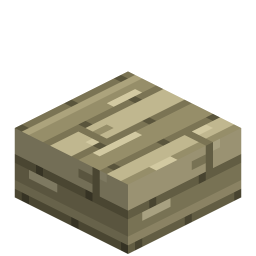
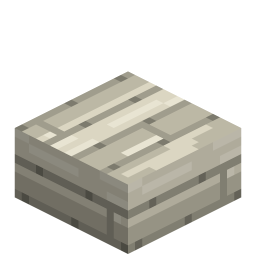
Both trees work for a fluxionist. A living weeping willow by water raises the flux of its chunk 1.35 times — by a workshop, where the Workbench and devices draw flux from the land, there is more of it. A lumenash with living leaves turns the murk of its chunk into flux — 0.02 a second per trunk, up to three trunks a chunk: plant lumenash where murk settles. Both woods make planks, stairs and slabs, and the herbs of the currents grow under the trees and by water — read each one with the Loupe and its page opens here.
The weeping willow grows in swamps and along rivers, lakes and brooks — no farther than ten blocks from water. Its trunk leans, its branches arch, strands hang from its clouds of leaves down to the ground: shears take them whole. One willow in eight is old and hollow: its foot is swollen, with a slit in it, and inside lie a Reckoner coffer that a gauger hid by the water and a Glint Nest where curls of glint flame still glow in the strands. At night the hollow glows through the slit. A willow grown from a sapling never gets a hollow: only old ones have it.
The lumenash grows rarely and alone — in woods, plains and meadows, more often in the Weeping Floodplain. Its leaves glow and flicker with Gleam, samaras fall from its twigs. A trunk clears murk only while living leaves stand over it: a felled lumenash clears nothing. The oldest of them — the Elder Lumenash with a skein in its hollow — is told of in the entry "Skeins".
The planks of any tree of the currents — willow, lumenash, mirebound planks and the trees of the places — make a boat: it goes on water like a boat of the game and carries two. Five planks in a trough at a crafting table; a boat and a chest make a boat with chest of twenty-seven slots. Each has the Drift sign carved on its bow, filled with resin the color of its wood.
Rippleleaf is Tide in a body of grass (Tide 3, Root 1): on the Crucible's quiet heat it dissolves into Tide with no stone and no water. The herbalist's Herb Mortar grinds it into two cyan dyes, it goes into the Fish Trap, and a herbalist buys ten for an emerald. It grows at the very edge of water — swamps, rivers, beaches, woods and plains; rings of ripples run over its leaves.
Emberbell is Ember that does not burn your hands (Ember 3, Gleam 1, Root 1): on the Crucible's quiet heat it dissolves into Ember. The mortar grinds it into two orange dyes, a herbalist buys six for an emerald. It grows by lava in caves, on deepslate and basalt, and smolders dimly in the dark — by it you know there is lava round the bend.
Murkcap is a sign of murk you can see without the Loupe: flakes of it rise over the cap (Murk 2, Gloom 1, Root 1). Where it grows, the flux has stood still: plant lumenash there, not a workshop. The mortar grinds it into a purple dye, a herbalist buys four for an emerald, and in the smoke of a Murk Fumer the game's mushrooms turn into murkcaps. It grows in dark damp caves — by water, on silt, clay and moss.