
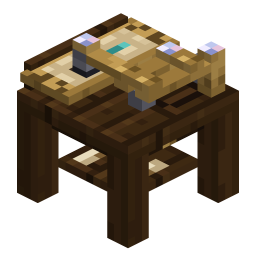
The Pantograph
A table where you cut a spell of your own into a lens blank. Read a cartography table with the Loupe.
How to open it
- Read with the Loupe: Cartography Table or Cartography Table
- Notes: The Conduit — 5
- After the entries:
 Branch and Fork
Pages of the entry
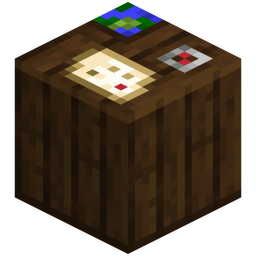
A tracery is a spell no node of the Lens Grinder makes: lightning that leaps between foes; two strikes at two targets from one lens; a strike that repeats from a rune in the air. You draw it yourself — on a board, with springs, channels and mouths — and the Pantograph cuts the drawing into the opal of a blank. A pinch of quickdust on a cartography table wakes it as a Pantograph. Lay a lens blank in the clamp and open it with an empty hand.
 +
 Pantograph
A spring is a current shard: a stream of strength one flows out of it. You lead a channel with the mouse from a cell to its neighbors, like the pen on a riverbed puzzle. A mouth is where the stream leaves as a strike; its kind is a carrier — Jet, Palm, Droplet and the others you have studied. The current that arrives decides what the strike does.
 Craft
The shape decides. Two channels that merge add their currents on the Wheel: Ember and Gale make Spark, and the Jet strikes with an Arc. A fork splits the stream evenly, and its mouths strike different targets. Opposite Springs — Tide and Ember, Strata and Gale — clash outside a basin: the strike hits with both actions, harder and two blocks around, but it murks. A basin merges them in peace. A curl — a ring of channel — repeats the strike; a lull delays it, and it comes later from a rune where you cast.
 Spark
 Blast
The current at the mouth is the action. Gale pushes, Ember burns, Strata cracks, Fray excavates; Tide is Douse: it puts out fire and wets; Lattice is Brace: steadiness for friends, sluggishness for foes; Spark is an Arc, Blast a Burst, Drift a Haul that drags the target to you. Rime, Bloom, Tempo, Murk, Venom, Shift and Hollow do what their nodes do. Other currents fall apart into the actions of their forebears: Alloy is Crack and Scorch.
 Tide
 Lattice
A tracery costs more than a cut: a channel is half a facet per segment, marks and mouths have their own facets; a cast costs facets / 4 flux and one more per clash. The strength of a tracery is the sum of the strikes of one cast: up to 3 on a small blank, 5 on a Lens Blank, 8 on a great one; facets — 18, 30 and 54. The cutter drinks the flux of the chunk, facets × 2, and asks a shard for every mark. To recut a lens is to pay again. The Pantograph does not take a ground lens, the Lens Grinder does not take a tracery.
 Prism
 Ember
The patterns in the Pantograph window are where to begin: «Arc» (Ember and Gale merge), «Twin Fire» (a fork at two targets), «The Curl», «Steam» (a clash), «Delayed Blow». A click lays a pattern on the board — then change it yourself.
 Gale
You can keep a tracery and give it away: «Make a tracing» above the board lays the drawing on a sheet of paper — the tracing shows in the list under the cutters at any Pantograph, and a friend on the server cuts it at his own. Above the sheet are the name of the tracery (seen on the lens, in the lens wheel and in the Conduit line) and a drop of ink: gold for free or a dye from your inventory. Changing only the name or ink costs no shards and no cutting. The drawing turns and mirrors with the buttons above the board and shifts with the arrow keys; «Trial» on the sheet shows in a small scene whom the tracery strikes and when.
 Echo