
Radio telescope
The dish, the radio map and the waterfall: how to tune the receiver to signals from the sky.
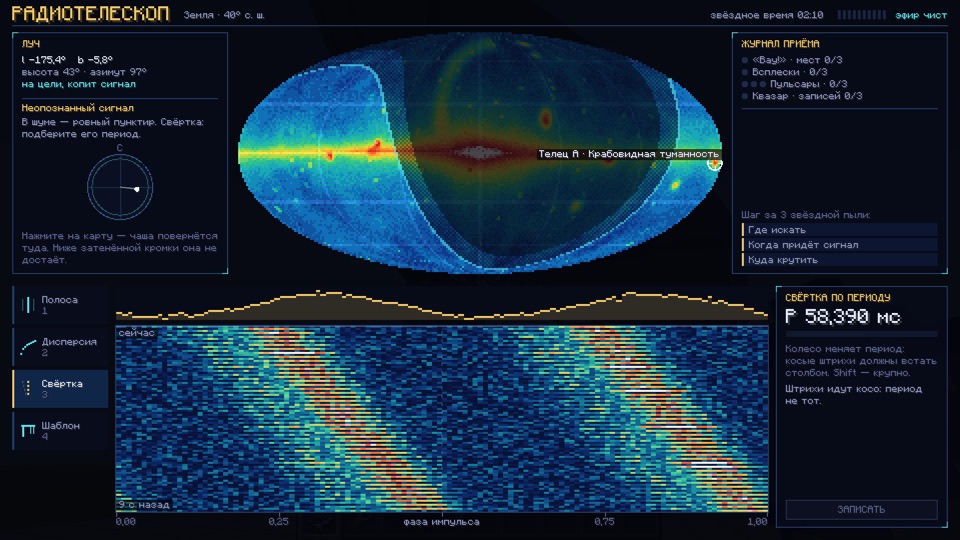
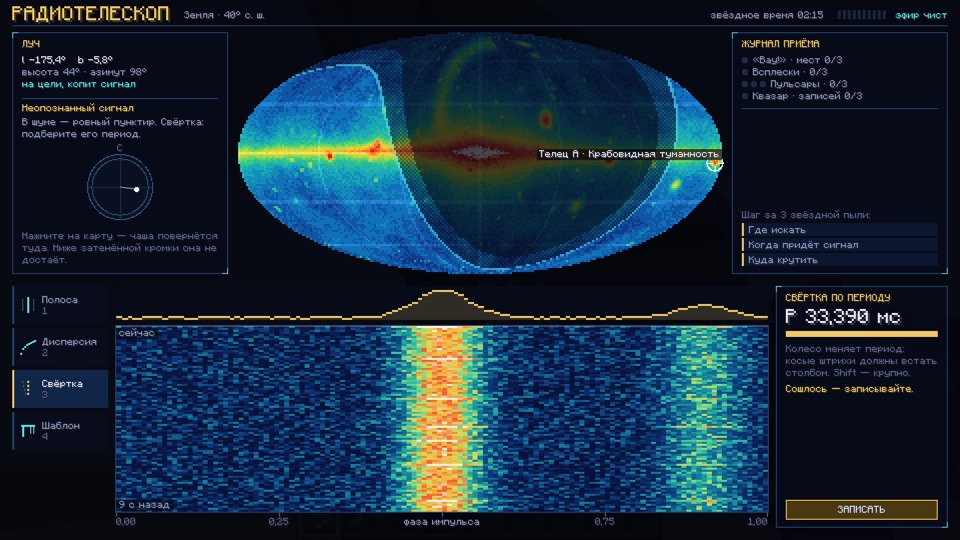
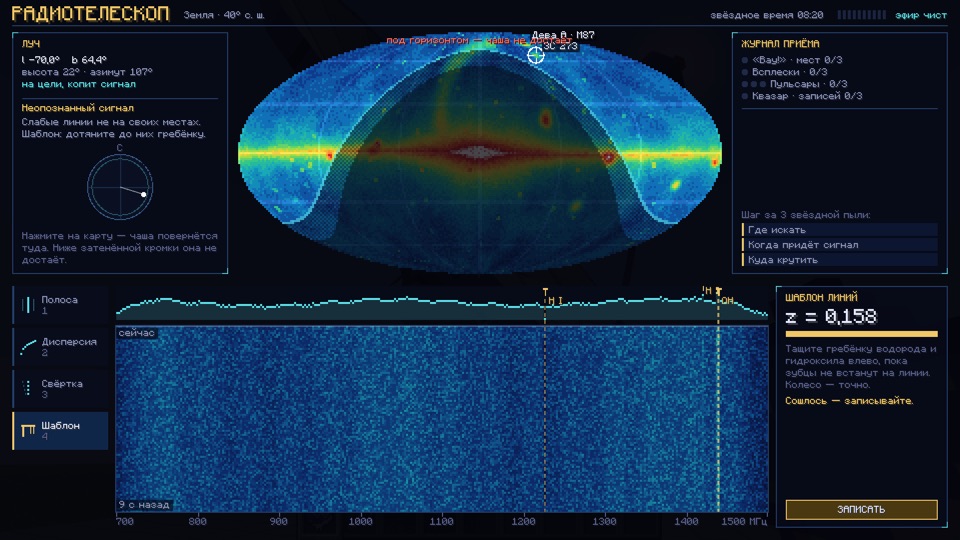
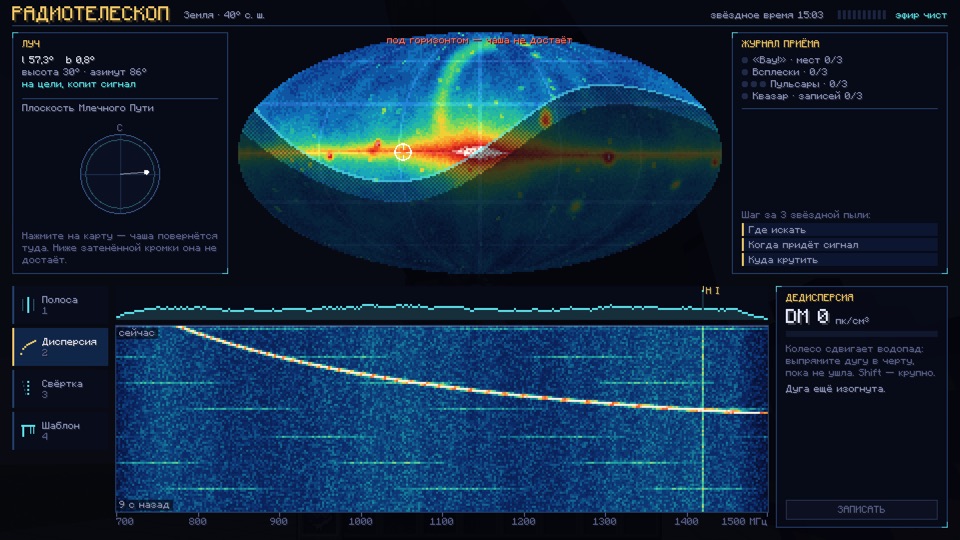
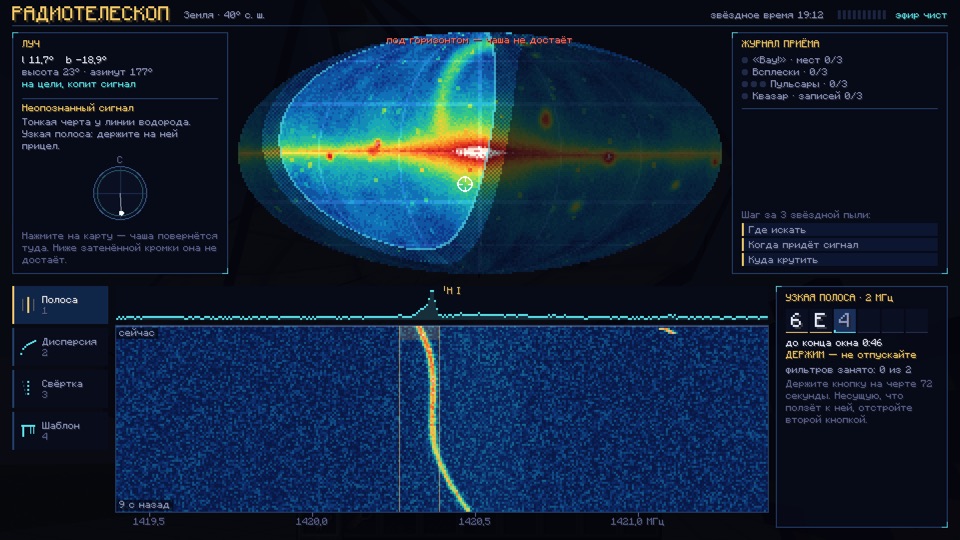
Stars are joined with lines, seams are traced with the crosshair, vents are heard in rhythm — and radio is tuned. The radio telescope shows no sky: at the top is a radio map, below it the waterfall: frequency left to right, time top to bottom.
Assembly
 Radio Receiver sits on a mast of three
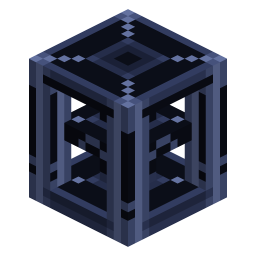 Lattice Mast, and around the receiver, at its level,
a 7 × 7 dish of
 Dish Panel. The receiver shows missing blocks as ghosts, and the last block placed
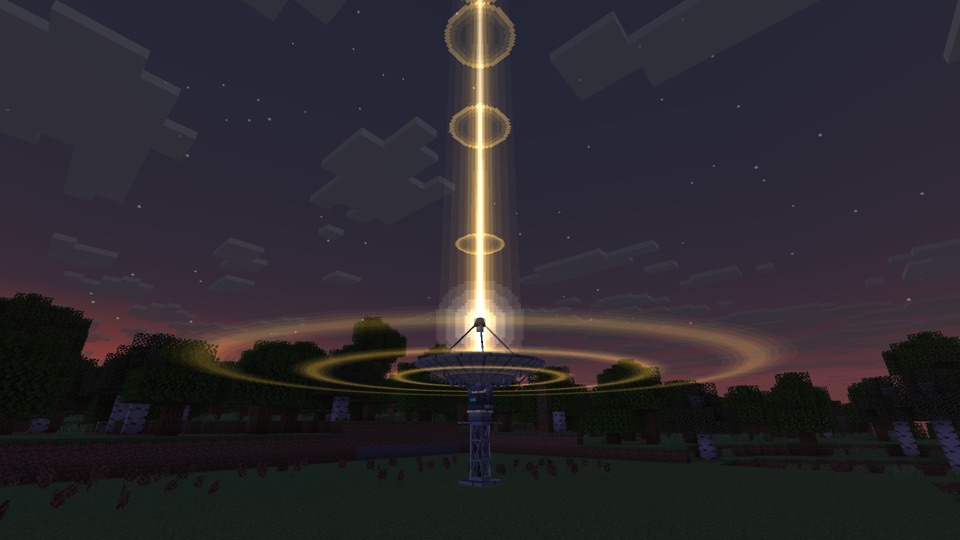
assembles the dish by itself. The dish looks where it was aimed and keeps tracking that point across the sky.
A real sky
The map is the real Galaxy: the disc and the bulge, bright sources at their real coordinates. What never rises over Earth can be seen from the Moon or from your own station. Running machines closer than 24 blocks and thunderstorms cause interference — put the dish away from your base.
Hands-on
Every kind of signal has its own tuning control — the beam panel tells you which one to take, but not the solution.
Everyone around sees a find: the dish shoots a beam into the sky in the color of the source.
The repeating source
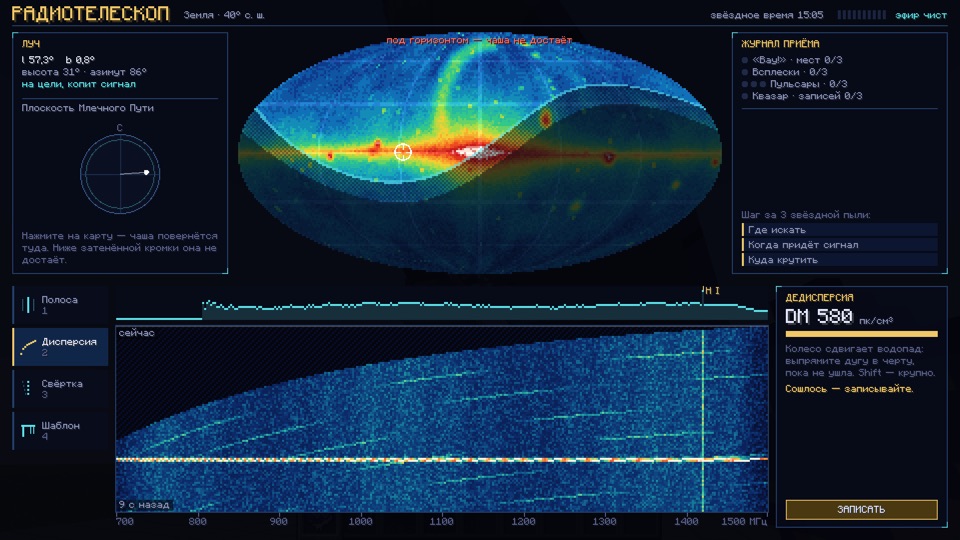
Almost every fast radio burst comes once. One source — in Vulpecula — repeats: once in five days it sends a series of three to six bursts in a night (the hint “when will the signal come” counts down to it). Point the dish at Vulpecula and straighten the arcs with the dispersion wheel.
The three-road interferometer
Three radio telescopes on three roads — in the Solar System, in the Interrift and in the Depths — listen as one eye once
they are tied together by hydrogen clocks. Build a 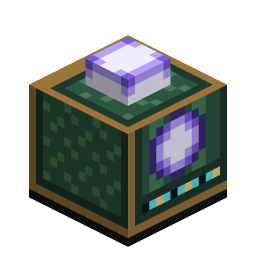 Hydrogen Maser from the blueprint
(
 Interferometer Blueprint) and set it beside the receiver of an assembled telescope.
Every four days comes the night of Sagittarius (a day and a half long); outside it the maser console says when the next
one begins. On the night press the maser and keep the crosshair on the drifting bright center for a minute — on every road it
moves in its own way. You get a  Night Record.
 Shadow
What next
- From orbit the whole sky is visible: “Ships and space”.
- Radio logs feed research projects: “Station Observatory”.
- Where the navigation records lead — “Interstellar space” (behind a spoiler).