
Rockets and flight
Fuel, the launch pad, assembling a rocket and flying to a world you have found.
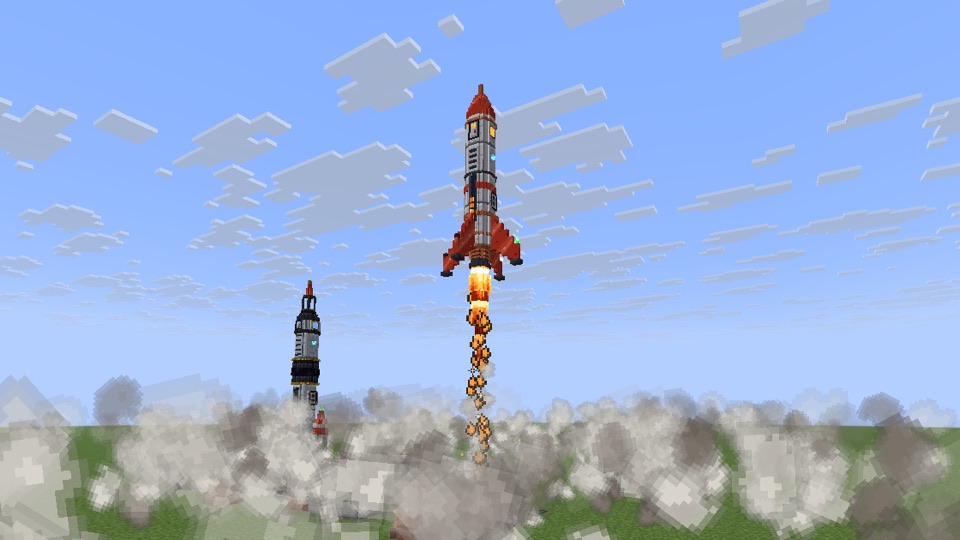
A world found through the telescope can be visited. Rockets come in four tiers: lunar, interplanetary, heavy and deep space — each flies further than the one before.
What you need
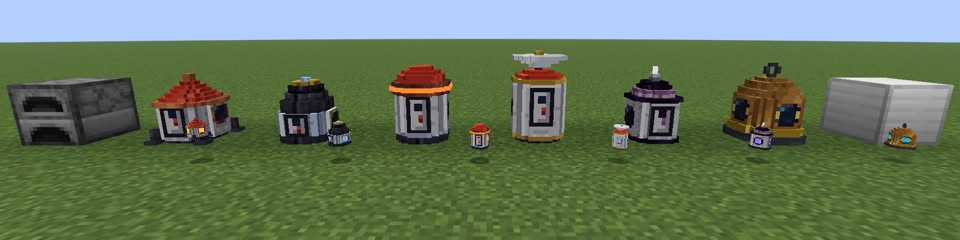
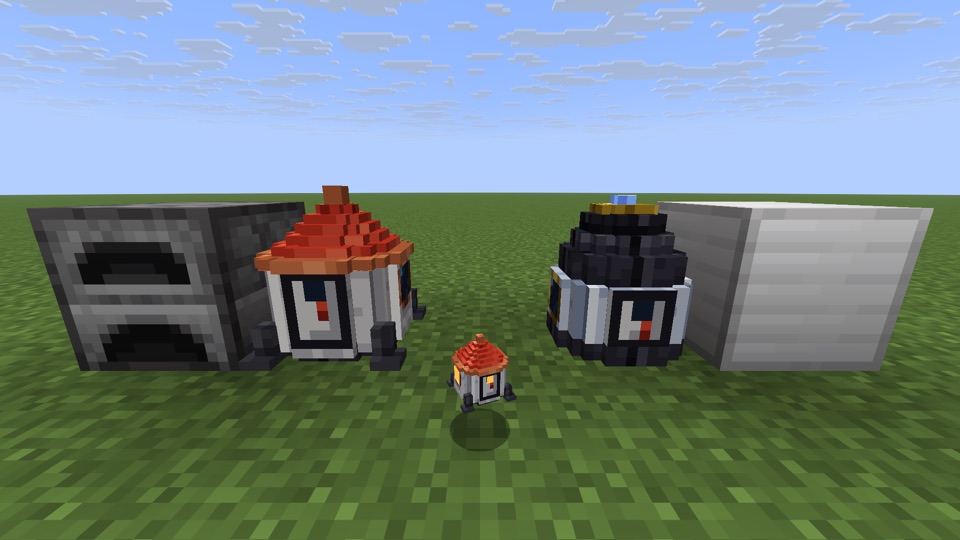
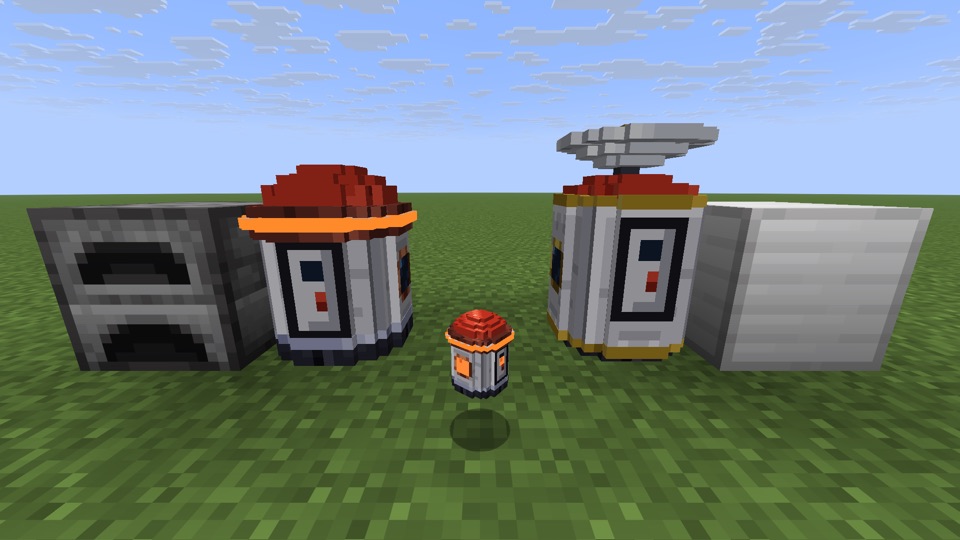
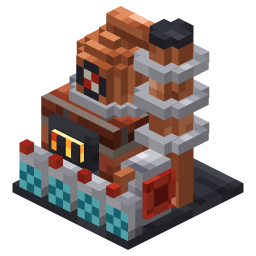 Fuel Plant — fuel: open the plant, put in coal and empty canisters (two pieces of coal fill a canister);
hoppers work with it as with a chest.
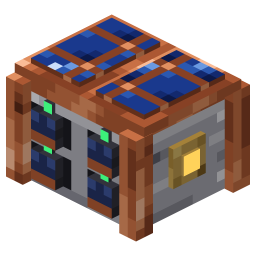 Charging Station — charge: under the open sky by day it charges flat batteries, half a minute each.
Every flight drains one battery.
 Launch Pad Plate — the launch pad; the rocket is assembled on it and does not take it along at launch.
- A battery block charges batteries from the grid of the base machines too, see “Machines and energy”.
Flight
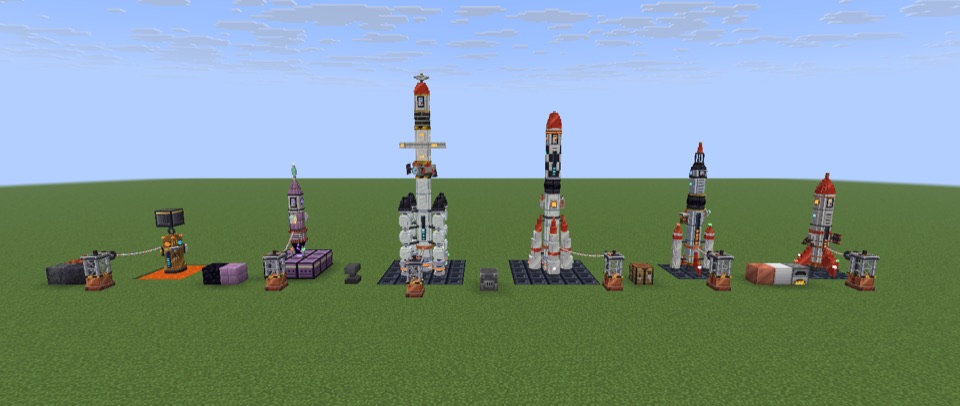
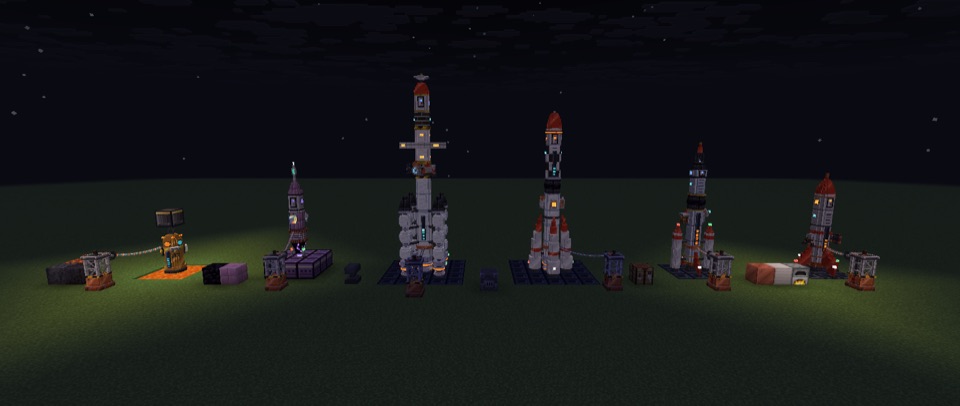
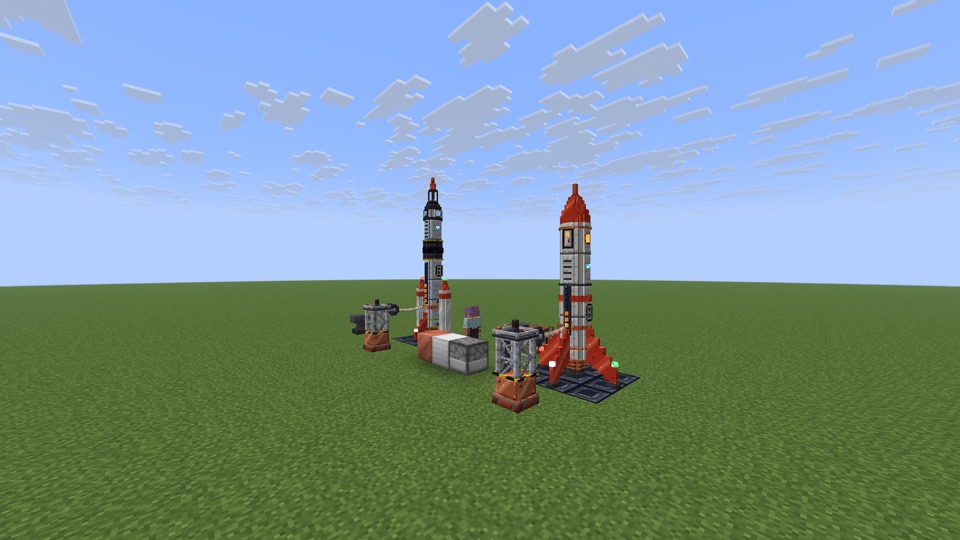
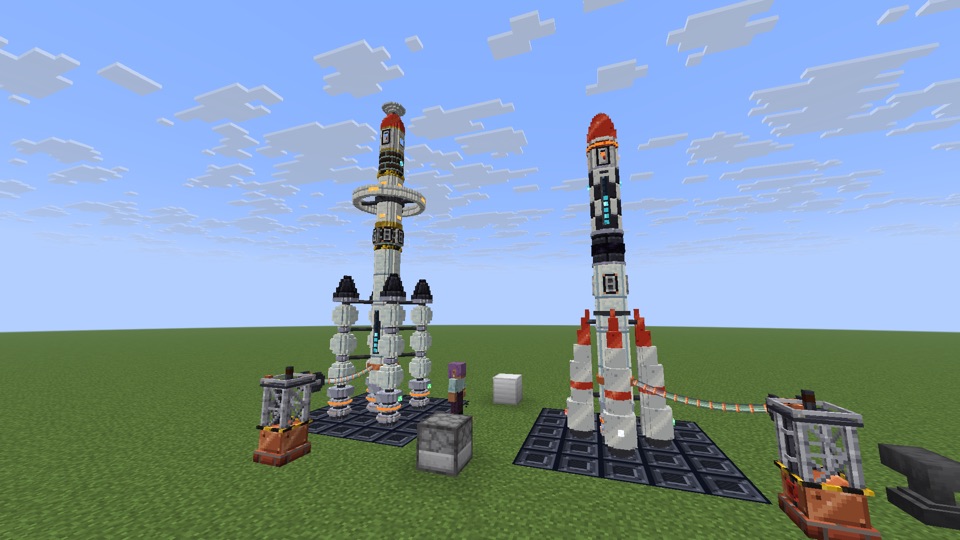
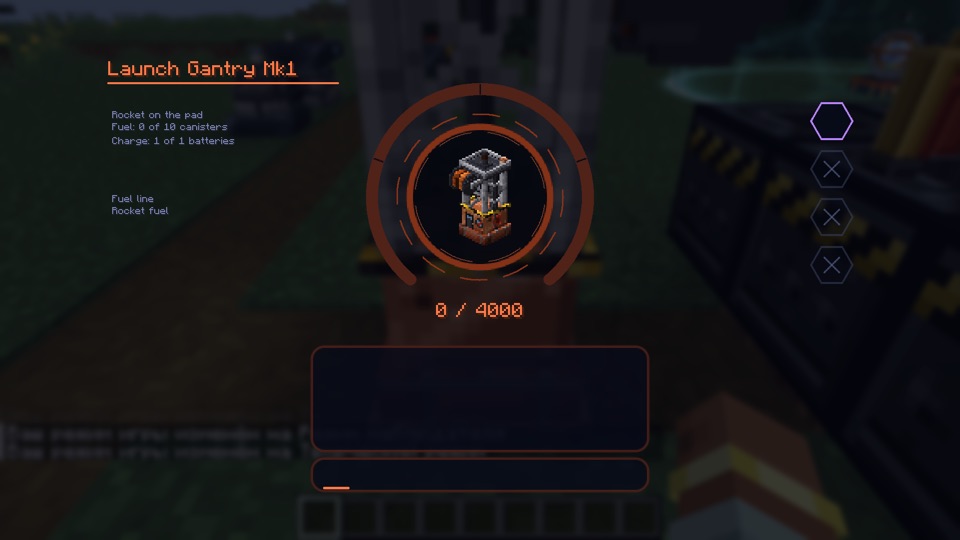
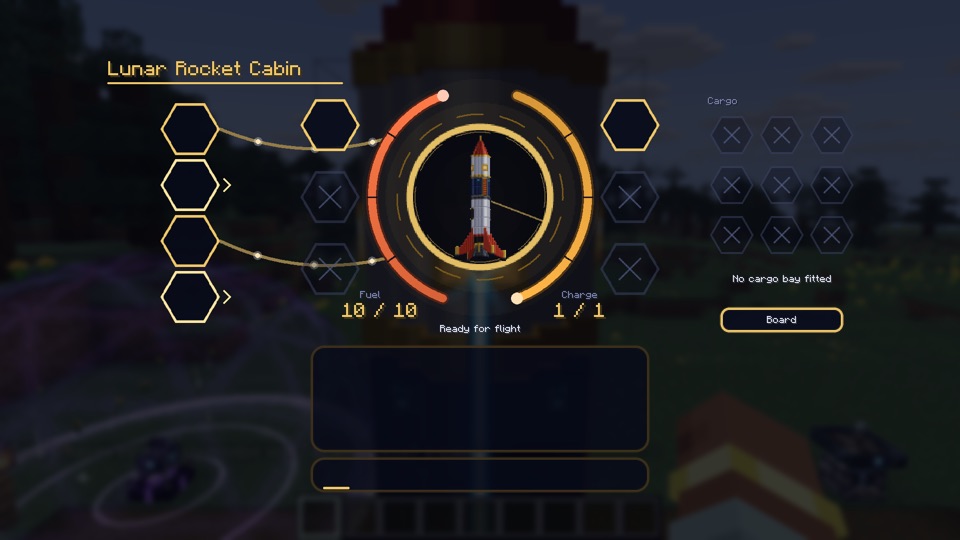
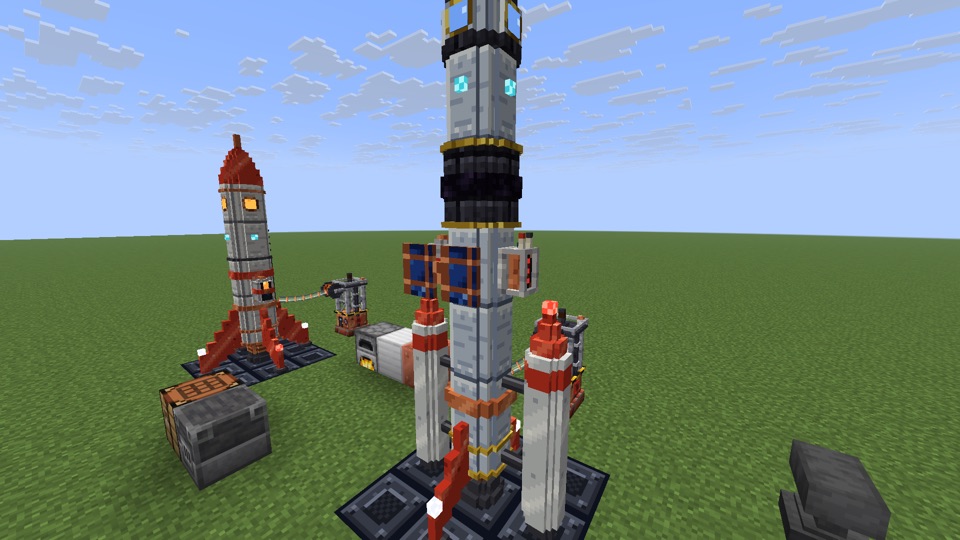
- Build the rocket on the pad from the bottom up — the journal shows the layout; it assembles itself once the last block is in place (on the lunar one, the nose cone above the cabin). A gauge on the front of the tank shows the fuel, the lights on the fins and the cabin windows show the charge. The tiers are told apart from afar by their silhouette: the lunar rocket is stout, on four red fins; the interplanetary one is tall, with two boosters, a black heat-shield band and an escape tower above the capsule; the heavy one is a thick tower on a white "skirt" of four boosters, with a checkered section and a blunt red nose; the deep space one is a ship on five engines with spherical tanks, a habitat ring (it spins while there is charge) and an antenna dish on top. On the heavy and deep space rockets the gauge shows helium, and the coil rings above the nozzles glow orange.
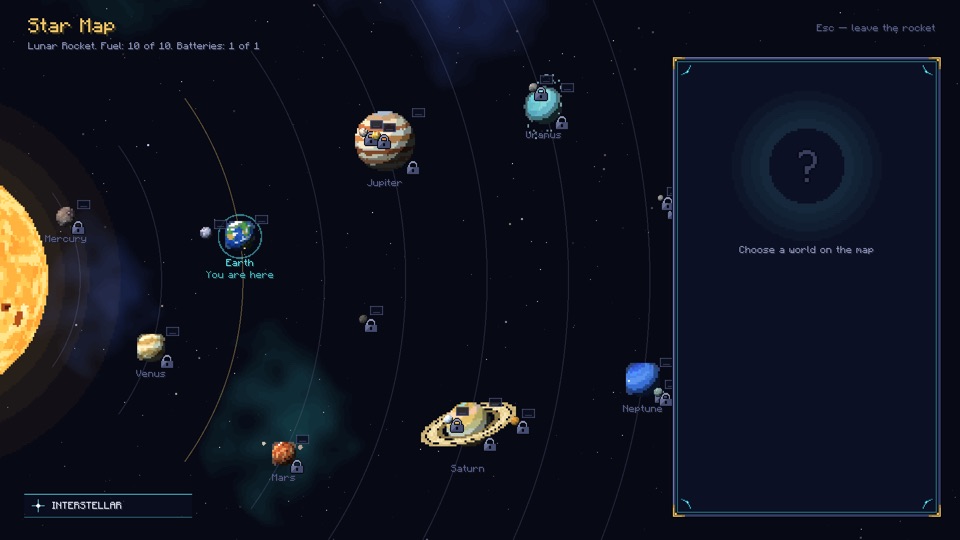
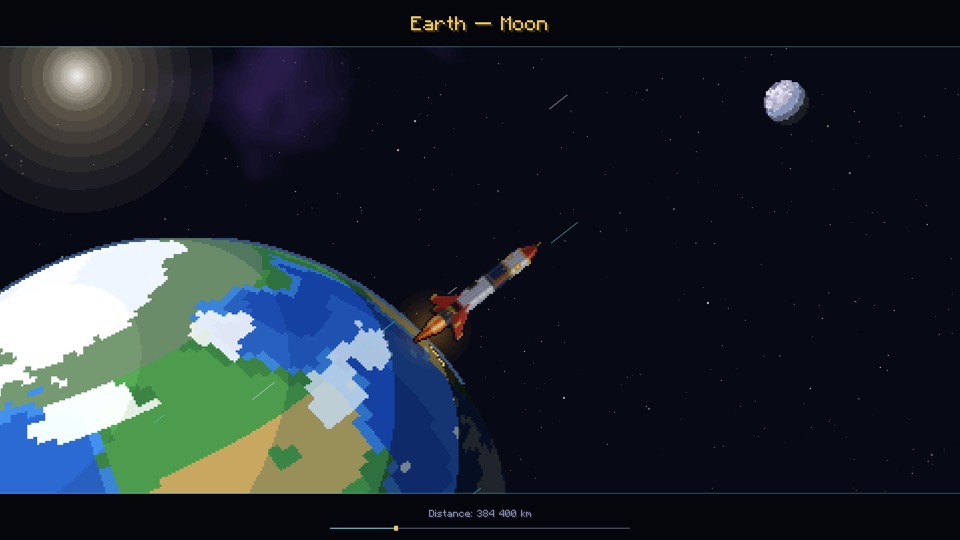
- Sit in the cabin and open the star map: you can only fly to a world found through the telescope, and only with open sky above the rocket.
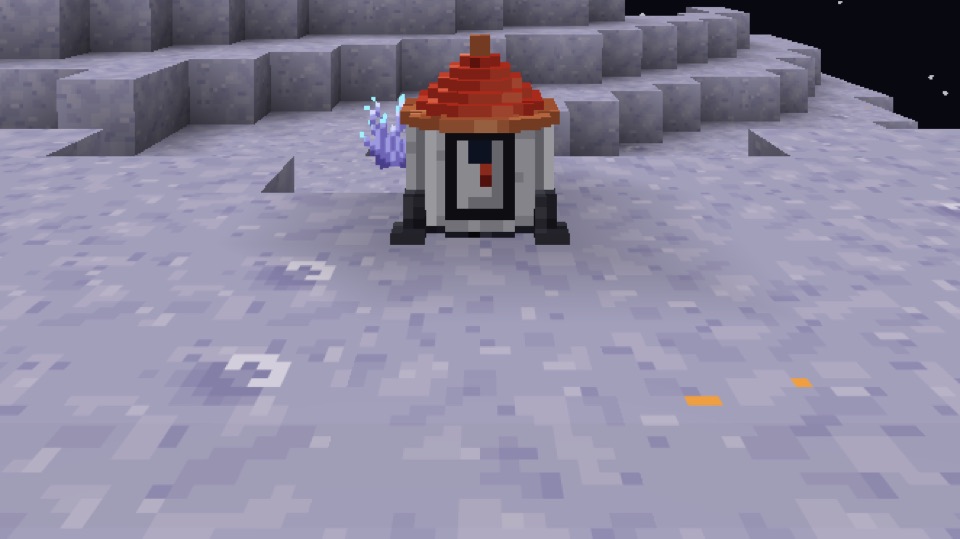
- The rocket lands where it stood before in that world, and in a new world it looks for a flat free spot. It breaks nothing and never lands amid lava: there is always solid ground to step out onto, and it keeps clear of the lava sea of Venus.
Pack for the way back before you go. For the chosen world the star map says what it takes to lift off from there: fuel for the way back, a charged battery (the flight drains it, and the lunar rocket has only one), a return stage (a new world has no launch pad, and none can be built under a landed rocket) — and a landing module: without it only the cabin comes down, with an empty tank. Home the rocket flies the same way, back to its pad. A rocket on the pad can also be filled through pipes — by the fueling and charging gantries.
Modules
A rocket has module sockets on its hull: two on the lunar rocket, three on the interplanetary, four on the heavy and six on the deep-space rocket. Fit a module by using it on a hull socket (sneak with an empty hand to take it off), or put it into the module slots of the cabin window. Every module shows on the rocket itself and is easy to tell from afar:
 Landing Module — two legs splayed sideways with feet, under a yellow-and-black striped housing:
the whole rocket lands, not just the cabin.
 Return Stage — a little rocket on a black nozzle bell: take off from bare ground, no launch pad.
 Cargo Bay — a crate of chest planks under an iron lid: nine slots of cargo.
 Passenger Seat — a hump with a porthole that glows warm: room for a second passenger.
 Extra Tank — a barrel with a red band and fuel glowing in its sight glass: half as much fuel again.
 Battery Pack — a copper cabinet with two terminals and red charge bars: two more battery slots.
 Solar Array — two blue wings: parked under the open sky, the rocket slowly charges itself.
 Life Support Unit — a fan over a blue glow of air: you can breathe in the cabin and next to the landed rocket.
 Kick Stage — a pair of white boosters that burn in flight too: a flight costs a fifth less.
 Surface Scanner — a white dish with a blinking lens: after landing it tells you which way the nearest
settlement is.
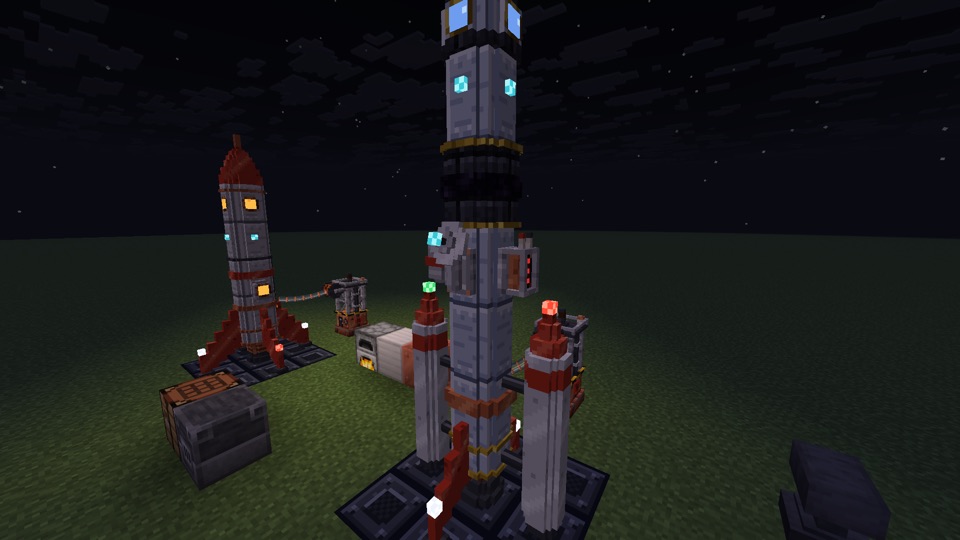
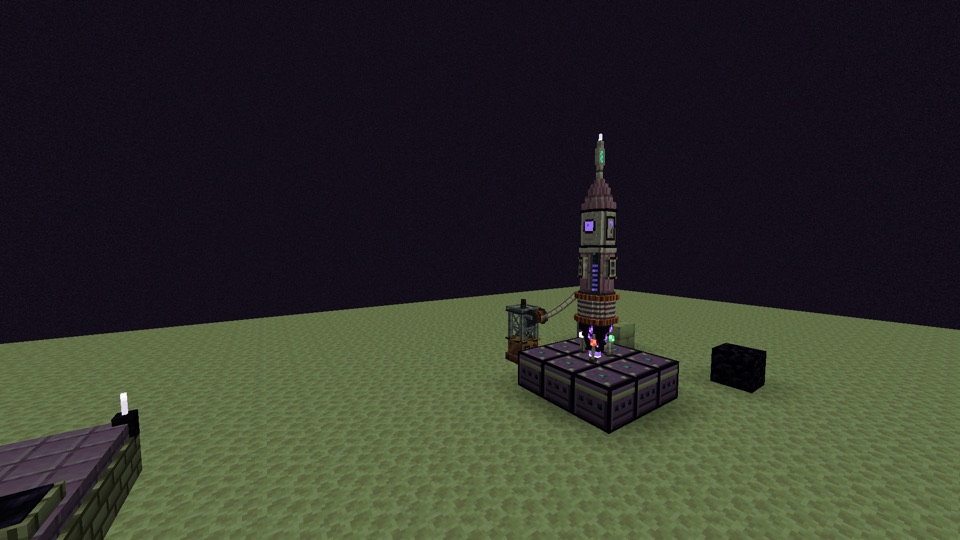
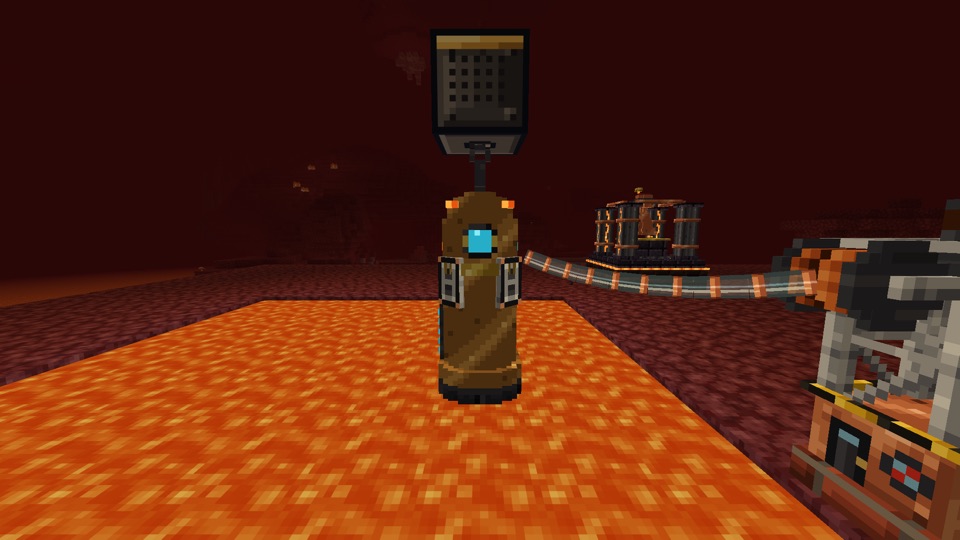
The shuttle and the bell
The dark and fire roads have no rockets: the shuttle goes to the worlds beyond the rifts, the bell to the bottom of the vents. Where the craft may go is decided by modules: the module for the next world is made from the spoils of the previous one. A module goes on the craft itself: click a socket on the hull with it in hand (sneak-click with an empty hand to take it off). Every departure from the End or the Nether costs a spool of thread or an ember-tempered chain and fuel by the world's distance, while the way back along the thread or chain is free, back to its dock or winch. A trip from world to world adds up both distances and can exceed the tank (from the Hive to the Eye it is 12 against a tank of 10): then go home first. The craft's console says "Ready to go" only when its supplies reach at least one found world; otherwise it says what is missing: "Not enough liquid pearl: the nearest world takes 3".
What next
- Before the first launch — “Oxygen, spacesuit and climate”: you cannot breathe in the mod’s worlds.
- “Machines and energy” — where the fuel and the charge come from.
- On arrival you will find “Peoples and tasks”, “Dungeons and world masters” and “Gates”.
- The shuttle and the bell start with their own instruments: the “Riftscope” and the “Magmascope”.
- Later a ship of your own replaces the rocket: “Ships and space”.