
Artifice Devices
The Flux Forge and its additives, the Gale Fan and brightsteel, the Molder, the Flux Mill, the Cascade and Ear Trumpet, the Fish Trap, the Updraft and Driftway, the Chart Table, the Towpath and boundary, the Grapnel, the Rune Stencil, the Memory Obelisk.
The Flux Workbench makes more than parts: devices of the workshop are built from them. All of them live on the land's flux — in a drained chunk they stand, by a river they work tirelessly. How craft is paid for — in the guide The Flux Workbench.
The Flux Forge
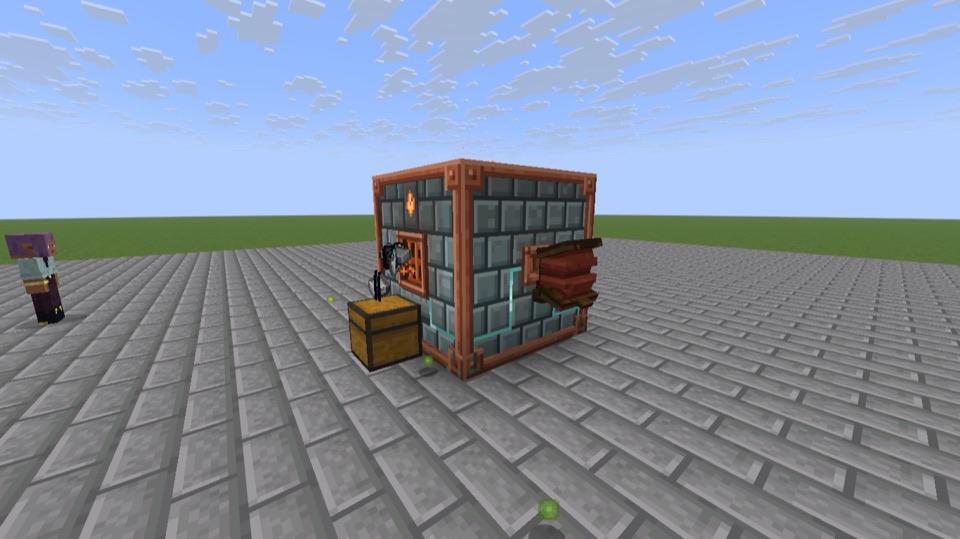
The 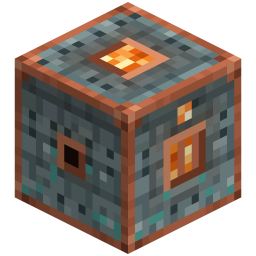 Flux Forge smelts ore three at a time, faster than a blast furnace and with no coal — on the land's flux.
It has no recipe: it is a structure. Entry — Flux Forge.
- Build a 3×3×3 cube: copper at the eight corners, a magma block at the heart, a copper grate in the middle of the front
(the tap hole) and in the middle of the top (the throat), everything else
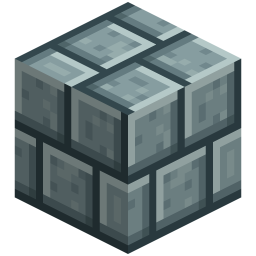 Flowstone Bricks. The diagram is in the
Codex; "Place ghost" sets it in the world.
- Wake it with a pinch of quickdust on any block: copper binds the masonry, flux veins show in the joints, the magma wakes as the forge's heart. Break any block and the forge falls apart into what it was built from.
- Ore is thrown on top or fed into the throat by a hopper. The result comes out of the tap hole — into a chest or hopper in
front of it, otherwise onto the ground. Every third ore drips
 Current Slag: dissolve it in the Crucible and the
ore gives up its currents.
- Its own work: worn metal (a sword, a pickaxe, chainmail, horse armor) the forge melts into nuggets — less than half of what went
into the thing; an opaline nodule opens into two layers of opaline; dripstone gets driven through with flux into
 Flowstone.

Additives
Currents in the forge — by a siphon over the top or a vial on the forge, up to 32 parts of each (four vials), a part per thing.
| Additive | What it gives |
|---|---|
 Prism | raw ore gives one more thing three times in four (2 parts per ore), an ore block always (3 parts) |
 Ember | twice as fast, with bellows up to four times |
 Gale | the bellows blow as on the place's Gale and blow iron through |
 Edge | from scrap — 60% of the recipe's metal instead of 45% (2 parts) |
 Gleam | instead of slag — up to 4 flux back to the land |
 Halo | while the chunk has murk, every thing clears a part of it |
| Ember with Tide | a gamble: half the ores give triple, a quarter double, a quarter perish and cloud the chunk |
| Prism with Gleam | a gem ore block gives one more for 2 Prism and 1 Gleam |
 Rime | tempering: iron, gold, copper and fluxsteel gear comes out whole and a quarter tougher (4 parts) |
| Rime with Ember | over-tempering — half again as tough, for one more part of Ember |
 Mind | twice the smelting experience; with Edge, enchanted scrap gives back its experience |
 Tempo | scrap and tempering twice as fast |
 Strata | smelting on dry land: the forge drinks the land from a vial instead of chunk flux; with Prism, ore always gives one more |
The Gale Fan and brightsteel
- A
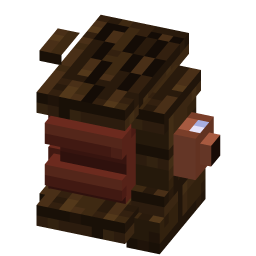 Gale Fan is set nose into a tuyere — the copper socket in the middle of the forge's side or back. The place's Gale
pumps the bellows: each adds two thirds of a stroke to the forge, three bellows make it three times as fast; where Gale does not
flow, at half strength. The bellows speed up a retort too.
- Only bellows on Gale blow iron through: almost half the metal goes off as scale, the rest comes out as
 Fluxsteel Nugget. Entry — Gale Fan.
- Brightsteel: a lumenash log in the forge gives
 Lumenash Charcoal; the charcoal with a fluxsteel ingot gives a
 Brightsteel Ingot and a pinch of silt, and the chunk gets a little cleaner. In a murky chunk annealing fails
(Brightsteel). Brightsteel makes the bright retort, band and prism: devices that lose not to murk but to silt.
Flux ForgeThe Molder and the Flux Mill
- The
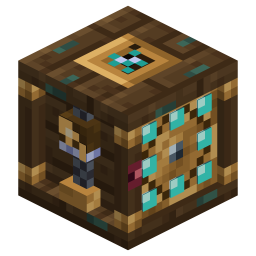 Molder makes a crafting recipe by itself, after your template, once a second: a container of raw materials
above, a place for the result below; a unit of flux per piece. Using it opens the template board: touch a slot with a thing and its
imprint stays (oak planks accept spruce too, if the recipe takes any). A redstone signal stops the press (The Molder).
- The
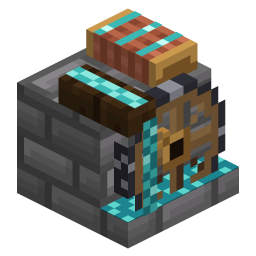 Flux Mill feeds other mods' machines with the land's flux: one flux makes 800 units of their power, up to 40 per
tick. It pushes power into neighboring machines and cables; with no one to take it, the wheel stands and no flux is spent
(Flux Mill).

Signals: the Cascade and the Ear Trumpet
- The
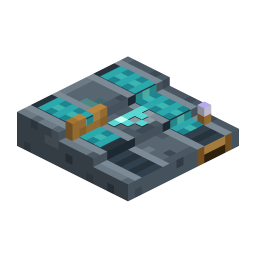 Cascade is a threshold for a redstone signal: it lets a signal through only when it is no weaker than the
threshold, and puts out its own strength. Using it raises the threshold a step, sneaking moves the output peg
(Cascade).
- The
 Ear Trumpet turns sound into a signal: a note block of its note or a bell within ten blocks. Using it tunes it a
semitone up, sneaking switches between "pulse" and "toggle" (Ear Trumpet).
Water and wind: the Fish Trap, Updraft, Driftway
- The
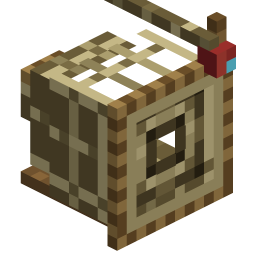 Fish Trap gathers things from the water by itself: whatever floats within four blocks, the current carries to
its mouth. Take the catch with an empty hand or a hopper below it (Fish Trap).
- The
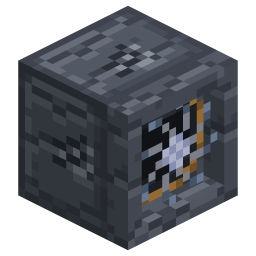 Updraft is a lift and an air chute: a stream of wind carries creatures and things where its mouth faces, up
to ten blocks. Updrafts chain; sneak in an upward stream to sink; a redstone signal silences it (Updraft).
- The
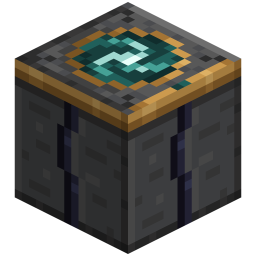 Driftway Landing makes a Driftway, a lift for any number of floors in one shaft: a landing in the floor of every
story, an open shaft between them. Jump — a floor up, sneak — down, an empty hand on a landing — the list of floors. A unit of flux
per ride and one more for every 64 blocks (Driftway).

Road, boundary and the Grapnel
- The
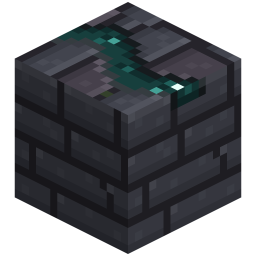 Towpath is paving with a channel of Drift: whoever walks with its flow is carried faster than a sprint, against
it drags; things float along by themselves.
- A
 Boundary Stone is set in pairs — at the same height, on one line, no more than 16 blocks apart: a boundary two
blocks tall rises between them. It is a wall to monsters and automatons; people, animals and things pass (Towpath and Boundary).
- The
 Grapnel is a hook on a line: wherever it catches on stone or wood, there it pulls. A throw costs a flux
charge — the Charging Basin fills the Grapnel (Grapnel).
Chart Table, Rune Stencil, Memory Obelisk
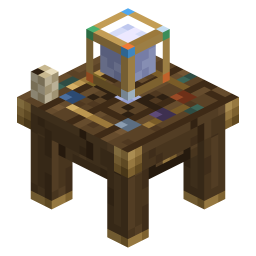
- The
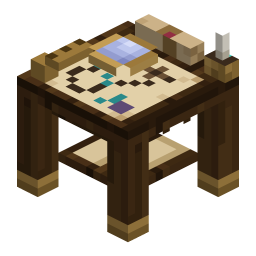 Chart Table shows the surrounding flux as a 9×9-chunk map: turquoise — full flux, pale sand — dried out,
gold — a flood above the bed, a lilac film — murk; strokes show where flux flows. Where to set the workshop and the Catchment is
plain at a glance (Chart Table).
- The
 Rune Stencil in a loom puts any of the 42 runes of the Wheel on a banner, and from a banner on a shield; the
stencil is not used up (Rune Stencil).
- The
 Memory Obelisk is a bank of experience: experience in the stone is not lost on death, and within eight blocks of
the obelisk the anvil, the enchanting table and the Reckoning Desk take their price from it — at the cheapest level cost. It holds
a hundred levels (30,970 points); its owner decides who else may use it (Memory Obelisk).
What next
- The workbench, its price and gear: The Flux Workbench.
- The forge and retorts are sped up by the same bellows: Vessels, Siphons and Distilling.
- Device rules and machines — Devices and machines, every device — by group.