
A Fluxionist's First Path
From the first pinch of quickdust to the Crucible and the Flux Workbench: what to gather, read and study, in order.
The first hours of Fluxion are the Basics of the Codex: you learn to read the world with the Loupe, wake things with quickdust and solve your first riverbed puzzle. This guide walks that path step by step, in the order the Codex itself leads it. The short version is Getting started.
What to gather first
| What | Where | What for |
|---|---|---|
 Tide Shard and the other shards | crystal nests in caves where the flux has stood still for ages | quickdust, refilling the pen, paying the Flux Workbench |
 Raw Antimony | antimony ore underground |  Antimony Regulus — for quickdust and speculum |
 Opaline | deep underground, near the deepslate | Loupe glass, lenses, vessels |
| redstone, a bookshelf, a lectern, a cauldron | the vanilla world | the dust and the first awakenings |
Crystals grow in the six primal currents — the four Springs and the two Poles; each glows its own color and rings softly when touched. A broken crystal drops shards, and their colors tell them apart.
Step 1. Quickdust and the Codex
 Quickdust is a cheap recipe on the ordinary crafting table: shards of the four Springs, an antimony regulus and
redstone. It needs no entries — the Codex comes before everything else.
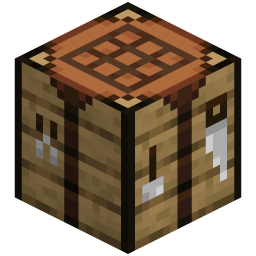 Crafting Table: shapeless
A pinch on a bookshelf (any, the chiseled one too) — the shelf crumbles, and  Codex of Currents rises from a
vortex of currents. Knowledge lives in you, not in the book: a lost Codex is woken again from another shelf and forgets nothing.
A few seconds after the awakening a line above the hotbar tells you how to open the book.
The first entry, The Codex of Currents, is open from the start: press Study. The Codex opens itself on an entry you can
already study, and once you know enough for a new one, a line above the hotbar says Ready to study.
Step 2. The Loupe
Entries ask for knowledge, and only the  Loupe brings it. Its recipe is in the first entry.
Hold the Loupe on anything — a block, a thing, a creature, the air — for a second and a half. The first reading of a thing gives notes to the chapters its currents lean toward, and a current you have never met is revealed and brings notes of Basics. Read everything: grass, water, ore, animals, your own tools. How the Loupe works is in the Loupe guide.
Step 3. Basics in order
The entries of Basics are joined by streams: what you study flows into what follows from it. The usual path:
| Entry | What it needs | Hint |
|---|---|---|
 The Flux of the World | 2 notes of Basics | any first reading |
| The Loupe | 3 notes of Basics | read a couple more new things |
 Currents and the Wheel | 4 notes, all four Springs revealed | read water, stone, fire and a feather |
| Quickdust | 3 notes, a bookshelf read | the Codex remembers where it came from |
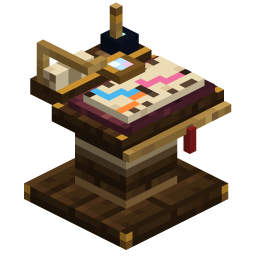 The Desk and the Riverbed | 6 notes | quickdust on a lectern wakes a Reckoning Desk; solve the lesson puzzle |
| Current Crystals | 4 notes of Basics, 3 of Artifice, a crystal or shard read | a puzzle at the Desk |
| Opaline, Antimony and the Regulus | notes of Artifice and Alchemy, a reading | read the gem itself and the antimony |
 Murk and Mire | notes of Basics and the Stillness | read something where Fray, Hollow or Gloom flows |
Beside them are entries about the world:  Willow, Ash and Herbs, Omens,
 Hour Marks,
 Fair Copy. Take them in any order.
Step 4. The Desk and the first puzzle
A lectern woken by quickdust becomes a Reckoning Desk; a  Ruling Pen rises from the vortex if you
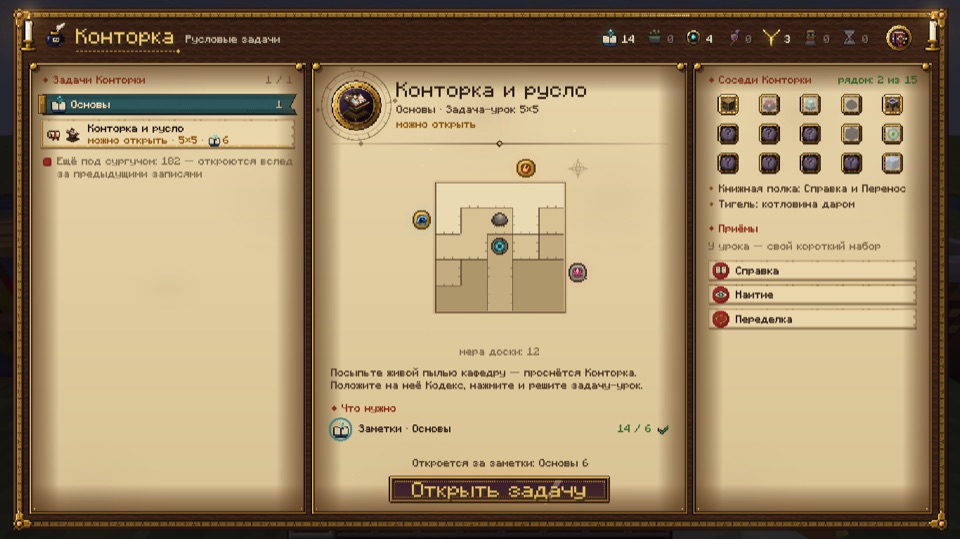
have no pen. Lay the Codex on the Desk and use it — a window with puzzles opens. The entry The Desk and the Riverbed is a lesson
puzzle: the window prompts every step. The board rules are in the Codex of Currents guide.
Step 5. The Crucible and the Flux Workbench
The entries of Basics unseal the other chapters. Alchemy comes first: 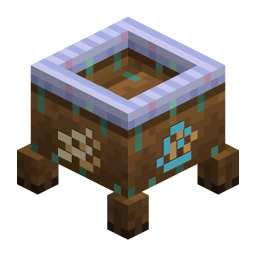 The Crucible asks you to read a cauldron and water.
A cauldron sprinkled with quickdust wakes as a Crucible: it dissolves things into distillate of currents and brews
new things from it.
The 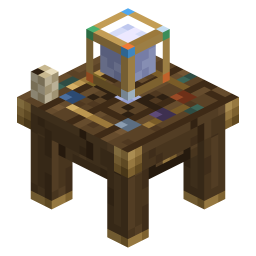 Flux Workbench comes later: its entry stands behind Fluxsteel from the Crucible. The Flux Workbench pays for
a recipe with the flux of your chunk — from then on, where you work matters.
Where to build the first workshop
- By a river. A river's riverbed is one of the deepest in the overworld, and the neighbors top the flux up quickly.
- With a willow nearby. A living weeping willow by water raises its chunk's riverbed 1.35 times.
- Away from murk. A murkcap in a cave is a sign the flux there has stagnated: plant a lumenash beside it, not a workshop.
What to beware of
Rough work leaves murk: remelting in the Crucible, a broken confluence, a cheap lens. Murk above a third of the riverbed grows mire. Watch the murk number by the Loupe's crosshair — the Murk and Mire guide.
What next
- The Loupe — everything the chief instrument can do.
- Currents and the Wheel — the language of the whole craft.
- The Codex of Currents — entries, knowledge and the riverbed puzzle.
- Flux and Murk of the World — where to draw flux from.
- The Crucible — the first device of fluxion.